I have packaging artwork
Build the package, map its faces and render the views.
Start with artworkDrafts and selected assets stay in this browser. Export a copy before clearing site data. Imported projects never resume paid requests. Large provider-hosted media may need downloading separately before its link expires.
Portfolio · applied AI for content production
Product imagery, campaigns and motion, connected by clear briefs, model choices and quality checks. Follow the VELUNE case from its camera plan and references into an H3 film, ElevenLabs sound and campaign adaptations.
My role Concept, workflow design, model selection and testing, with AI-assisted development and production. I direct the work, refine the references and review the outputs.
Build the package, map its faces and render the views.
Start with artworkCreate a campaign brief, choose a hero and make adaptations.
Start a campaignConnect the camera plan, appearance references and soundtrack.
Open Ad LabExplore a worked example
Load the packaging artwork, visual references and Blender camera plan behind the 15-second H3 Max film. Explore the picture prompt and ElevenLabs sound cues, then open the case study to see the film and campaign adaptations.
See the VELUNE case study ↗Editable working copy. No generation starts and no credits are used.
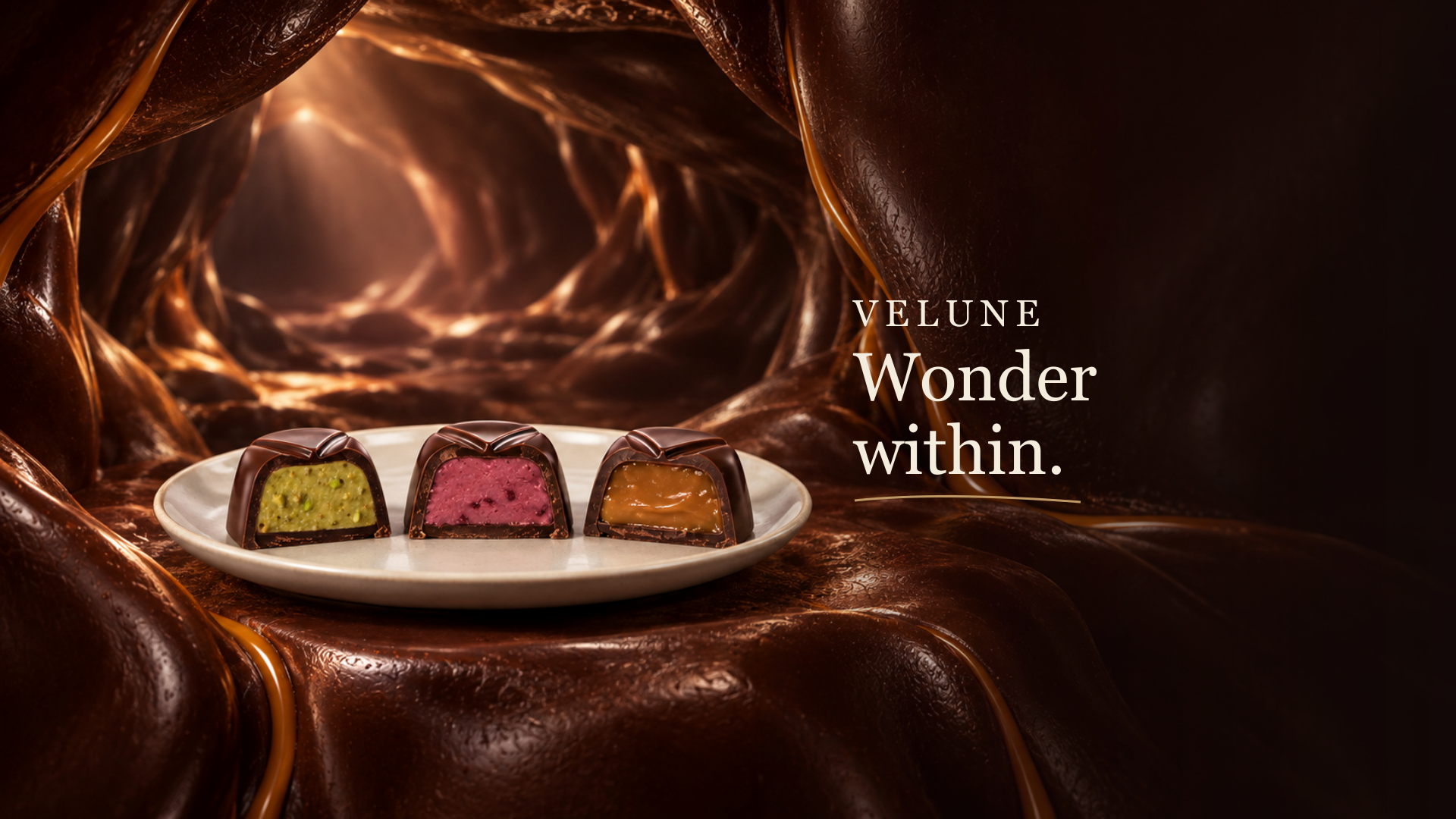 Campaign still / Wonder within.
VELUNE / Independent concept
Film · Stills · After EffectsA chocolate campaign spanning film, stills and social, with a fifteen-second Adobe After Effects motion study built through AI-assisted scripting. Follow the decisions from visual references to delivery, then explore editable typography, 3D carton moves and a chocolate portal reveal.
Explore the VELUNE campaign Watch the After Effects studyFeatured study
Directed in Blender. Finished with Seedance.
A camera plan built in Blender. Five references for packaging and food texture. An 18-second film generated with Seedance. Play them together to see the transformation.
Vanilla, chocolate and strawberry. An independent portfolio concept with placeholder branding. Each pass is labelled by how it was made.
Motion guide720 × 1280
Authored in Blender
Simple materials. Camera, timing and action.
Seedance film480 × 854
Generated with Seedance 2.5
Generated from the motion guide and five appearance references.
Seven shots
Press play to load the videos
Grazing macro arc across vanilla ridges
Shot cues follow the Blender plan. Timing in the generated film may vary.
Six surfaces, one production system
Each covers a different slice of what a retail agency actually ships, and they share the same intake, routing, cost and governance layer.
Shape a product ad with a beat sheet, references and sound direction
Preset ad recipes any SKU can run through, with editable aesthetics, beat-by-beat action and overlay specs. Reference-to-video keeps the product consistent. Sound is built in layers rather than asked for in one go.
Build an editable campaign brief and a multi-format creative pack
Vision analysis, an AI-written brief you can edit, then stills and video across formats, languages and seasons. Each deliverable goes to the model that suits it at the price it deserves.
Turn product photos or packaging artwork into usable views
Start from photos, or map flat artwork onto a measured package. Inspect it in 3D, render clean views and send the full set into Campaign Studio. Reconstructed views remain flagged for label QA.
Build a shot brief for editable 3D motion guidance
Settle camera, timing and blocking in geometry before a generative pass ever runs. This is the route that produced the study above. The builder checks the brief for mistakes that fail quietly.
Give references distinct roles and plan the timeline
Register, subject, and what each reference is actually for, then a timeline that makes you spend the seconds on purpose. Every field says what goes wrong without it.
Compare the configured models and choose a route for the job
Image, video and sound in one table, with each route’s price, strengths and limits. Pick a model for the job rather than out of habit.
How the work gets made
One campaign can span formats, placements, seasons, banners and, in Canada, two official languages. Each adaptation needs to preserve the product and the idea while working in its own space.
I built this studio to explore where AI can help with that work. A shared brief and reference set give each output a starting point; selection, typography, sound and review determine what is ready to use.
Create packshots, campaign stills, bilingual layouts, video and sound. VELUNE shows how the tools connect, including the selection, refinement and finishing needed to prepare the work for delivery.
Self-filling intake, one brief driving every deliverable, routing by job and price, and named quality gates. The playbook records the process so it survives past one person.
Image, video and sound routes sit behind one table with a written view on what is ready, what is emerging and what is not viable yet, plus a one-pager on suites versus aggregators versus direct APIs.
Review with evidence: preserve prompts and source references, flag reconstructed angles for label QA, and record the human decisions that an AI observation cannot establish.
What shipping taught me
Knowing what is ready, what is emerging and what is not viable comes from hitting the limits rather than reading about them.
VELUNE pairs the video model's original sound with a separate ElevenLabs voiceover. Voice, music and spot effects can be generated and reviewed individually, then balanced against the picture in finishing.
Bilingual tiles need legible, editable copy. Approve the image first, then set EN/FR typography in the layout; use model tiers for the visual job rather than asking generation to guarantee every letter.
A generated packshot of a panel no camera captured is a plausible reconstruction, not a record. It gets labelled that way every time. A wrong ingredient list is a recall, not a retouch.
New models earn their place against a real brief, a cost estimate and a review of the result. Shared projects keep the references and decisions portable; provider adapters keep each model's requirements explicit.
Every page here is open. Demo mode walks through intake, the brief, routing and quality gates at zero spend. Live rendering is behind a passcode, because each run bills a real account. Every live run shows its estimated cost and asks before it spends.
If you are reviewing this and want the passcode, message me on LinkedIn or email hello@ajwadrauf.com.